On-premise AI for law firms
A dedicated system inside your office that reads privileged material and produces draft chronologies and deposition summaries, without a single record leaving your building. Demonstrated with the internet unplugged.
Two days of paralegal time, or your duty of confidentiality.
A public AI tool will summarise a medical record set in about a minute. The moment those pages are pasted in, they are on infrastructure you do not own, governed by terms you did not negotiate, in a jurisdiction you did not choose. For most businesses that is an acceptable risk. For a practice holding privileged material it is a different category of problem entirely, and the pressure to do it anyway grows every time a deadline gets close.
This is already happening in most offices, quietly. Nobody signed off on it. A paralegal on a deadline pastes four pages of a transcript into a personal account because it saves an hour and there is nothing approved sitting on their desk instead. The exposure is not a decision anyone made. It is the absence of one.
Private AI is a deployment choice, not a different intelligence. The capability is the same. What changes is where the computation happens and therefore who can reach the file while it happens.
Not everyone needs a machine in the building.
The gap is the same everywhere: someone reaching for a public tool with a client's material in hand. What closes it depends on what the material is and how much of it there is. We will tell you which one you are on the call, including when the honest answer is the cheaper one.
On-premise, in your building
For privileged material and real document volume. Depositions, record sets, discovery. Privilege has no vendor agreement that covers it, the professional guidance is still unsettled, and the reading volume justifies dedicated hardware on its own.
This is the deployment the rest of this page describes.
Law firms, mainly personal injury and workers' comp.
Covered and governed, no hardware
For protected health information at ordinary volume. The major providers will sign a business associate agreement on their enterprise and API tiers, so there is a compliant route that needs no box in your office.
Consumer ChatGPT and Claude accounts are not covered by any such agreement. That is precisely what your front desk is using today.
Medical practices, med spas, plastic surgeons. See that page
One system, in your office, that never phones home.
Installed on-site
A dedicated machine is set up in your office and connected to your internal network. Staff use it from their own desks through a plain browser. There is nothing new to learn and nothing to install per machine.
Processed locally
Record sets and transcripts are read on that machine, in your building. No document is uploaded anywhere in order for the work to be done.
Reviewed by a person
Output is a draft. A paralegal or associate checks it and finalises it. The system is built to save reading time, not to remove judgement from the loop.
Maintained without exposure
Updates happen on scheduled windows you agree to. Maintenance never requires your files to travel.
Reading volume, so your people read what matters.
Medical record summaries
Reads a case's record set and produces an organised, date-ordered draft chronology. What used to take days of manual reading takes minutes, and a person still signs off on it.
Deposition summaries
Reviews transcripts and surfaces the moments that matter: key admissions, contradictions, and the passages your team needs for prep. Prep from what counts rather than every page.
Document triage
Sorts a delivered file set into what is clean and readable, what is illegible, and what needs a human eye first, so nothing quietly goes unread.
If you cannot point to it, you do not control it.
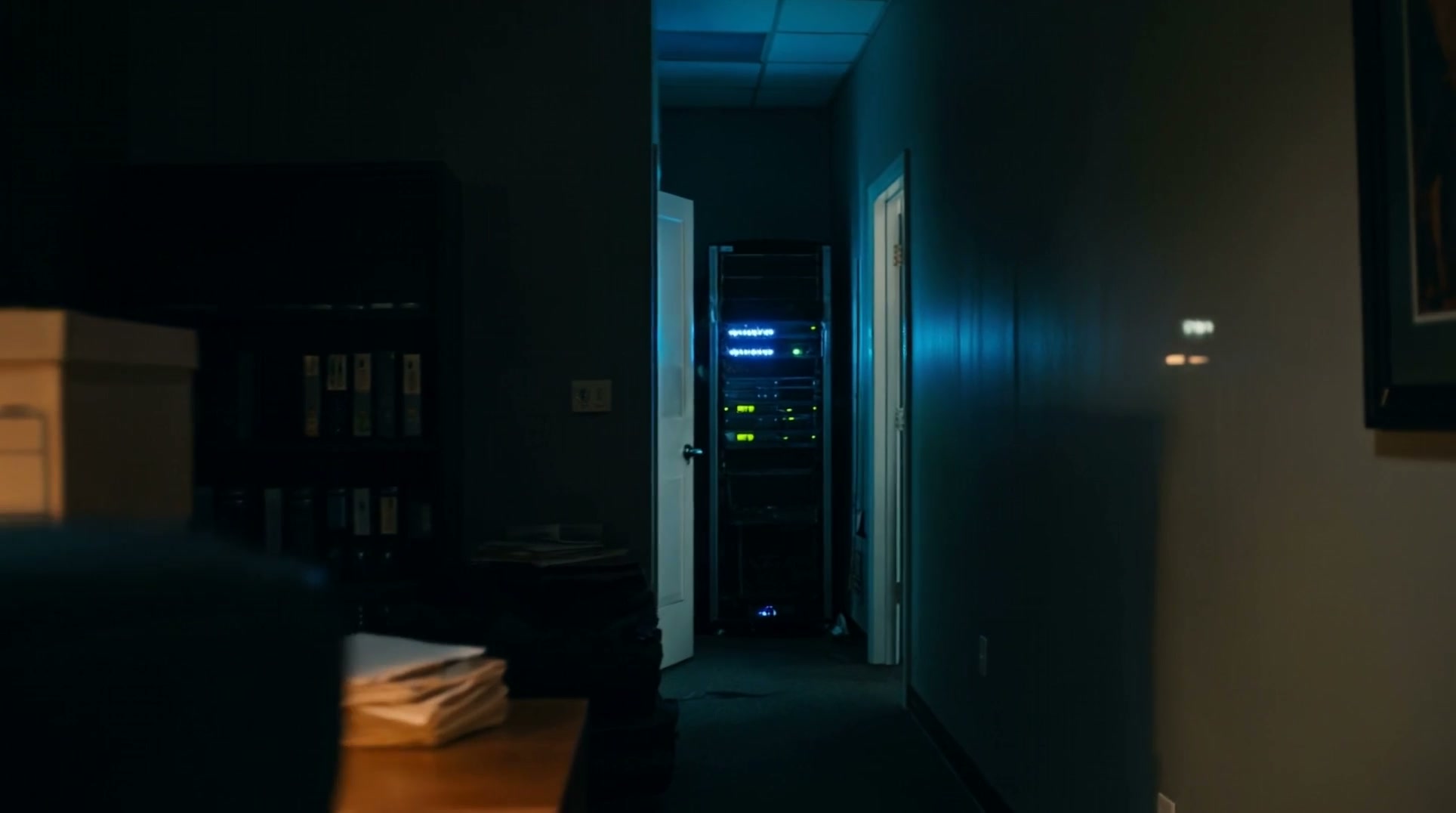
Every record that touches this system stays inside your office, under your control, for as long as it is there. Not on a vendor's cloud, not on a server you have never seen, not in a region you would struggle to name in a deposition.
Sanaku is candid about what this is and is not. It handles the large volume of clean, readable records so your team can stay focused on the smaller share of documents that genuinely need them. It does not practise law and it does not file anything.
The questions that decide it.
In your office. A dedicated machine on your own network, which your staff reach from their desks through an ordinary browser. Nothing is installed on individual computers and nothing is sent out to be processed.
You watch it run with the network cable pulled out. That is the standard demonstration and it is not a figure of speech. If the work completes with no connection, there is no path for a file to have left.
Two things reliably: date-ordered draft medical chronologies from a record set, and deposition summaries that surface admissions and contradictions. Both are drafts for a person to review. Neither is filed blind.
No, and any vendor who says otherwise is selling you something. It handles the large volume of clean, readable records that do not need a human eye on every line, so your team spends its attention on the smaller share that genuinely does.
Sanaku does, on scheduled windows you agree to in advance. Updates and maintenance are included. Your files do not leave the machine to make that possible.
The system is in your building and the documentation is yours. You are not holding a subscription that switches off; you are holding equipment and a configuration you own.
Probably not, and we would rather say so than sell you a machine. The major providers will sign a business associate agreement on their enterprise and API tiers, which gives protected health information a compliant route with no box in your office. What does not work is the consumer account your staff are using now, because those tiers are excluded from every one of those agreements.
For most medical use it is the right answer, as long as the coverage matches what people are actually doing. These agreements are specific to particular products and configurations, and consumer tiers are excluded outright. Most practices that believe they are covered are covered on paper for a service nobody uses, while the real work happens somewhere else entirely.
Do not take our word for where the files go.
Book a call and we will run the system against real document types with the internet physically disconnected, so you can watch the work complete with no route out of the building.